A deliverable your sponsor explores, with evidence behind every finding
The deliverable is more than another PDF. It is a space published under your brand: process map, findings, opportunities, and a chat that answers from the audit and cites its sources.
- Every finding is linked to at least one clickable piece of evidence
- Published versions v1, v2, and so on, showing what changed between them
- Never a full recording: short excerpts selected by the consultant
The starting point
A report read once
The traditional audit report lands at the end of the engagement as a sixty-page PDF. The sponsor reads the executive summary, remembers three figures, and soon forgets where they came from. When a question comes up three weeks later, someone has to call the firm or dig through interview notes nobody else has read.
A summary the consultant signs
The deliverable opens with the consultant’s introduction and recommendations. AI drafts a first version from the opportunities, and nothing is published until the consultant has reworked it. Next comes the process map, with its steps, its actors identified by role, and its tools, followed by the list of findings.
- An overview of all processes and how they connect, then each process step by step.
- Typed findings: pain point, double entry, volume, business rule, risk, good practice.
- Filters by process, type, tool, and confidence level.
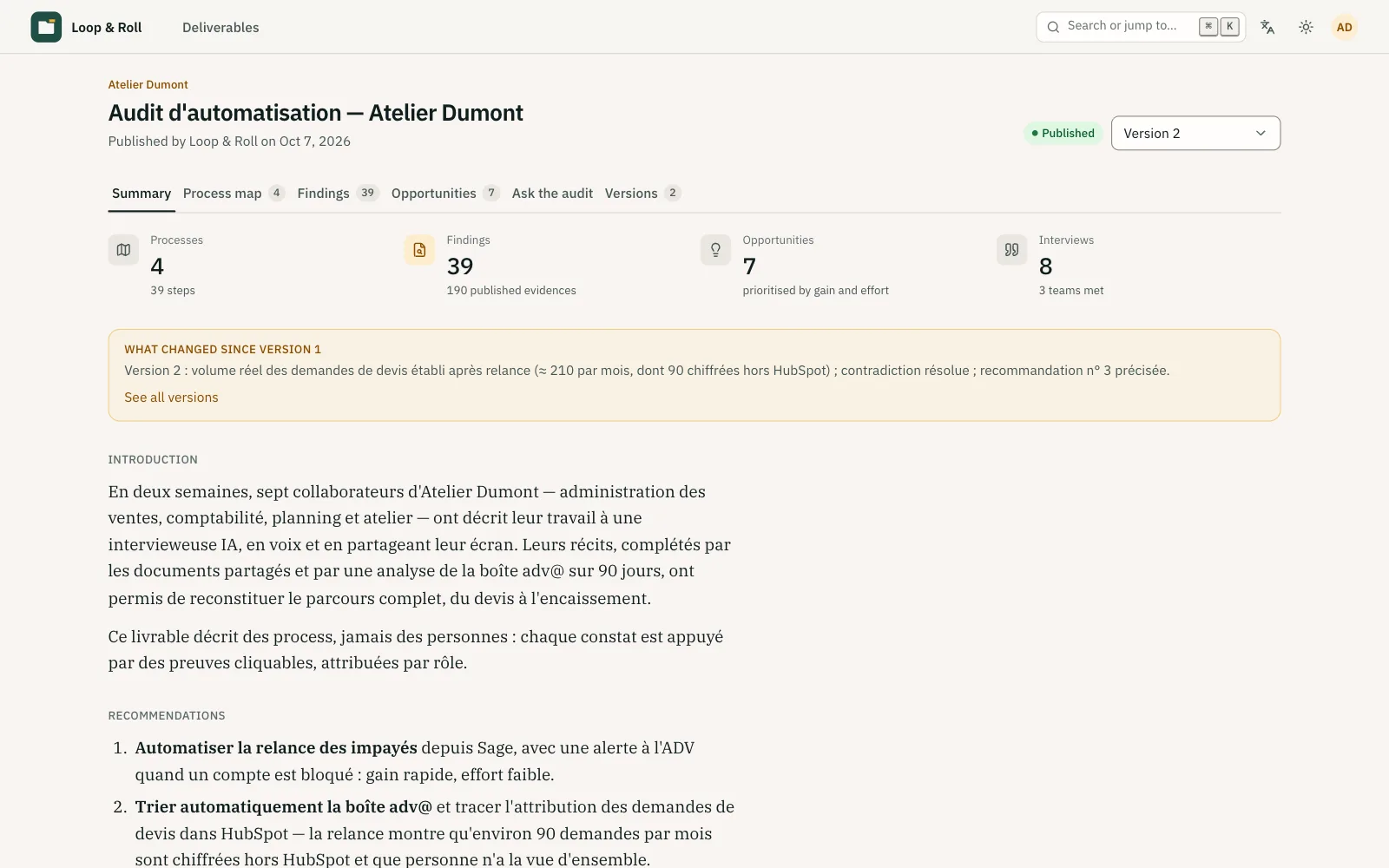
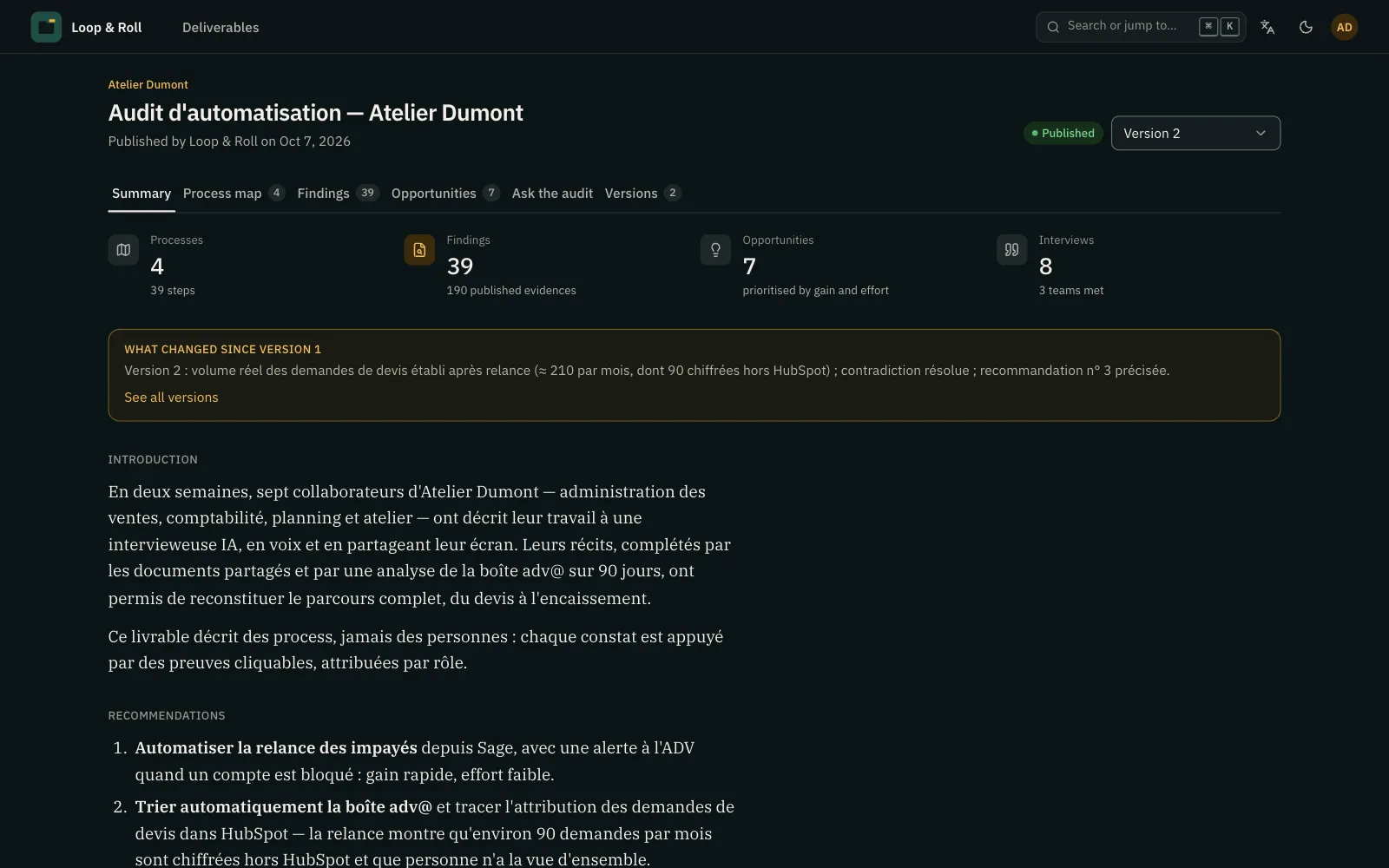
Opportunities with the math on display
Each opportunity states the problem it solves, the proposed solution, the estimated gain in hours per month with its range, the effort, and the risks. The calculation is shown: the sponsor sees which volumes and durations the estimate rests on, and which evidence supports them. The gain/effort matrix helps them decide.
- Gain/effort matrix view and list view.
- Priority set according to your method’s scoring scale.
- In a fictional audit: ~120 supplier invoices a month, ~4 minutes each, re-keyed into the ERP.
- Each opportunity links back to the findings that justify it.
Selected evidence, attributed by role
The consultant decides what goes into the deliverable: short excerpts, with the transcript and audio of the quoted sentence, and the pins set during interviews. The sponsor never gets a full recording or a complete transcript. Evidence is attributed by role, as in “an accounts payable clerk,” not by name.
- Named attribution only if the engagement allows it and the participant agreed.
- The sponsor comments on the deliverable, and the consultant replies in the same space.
- Each new publication freezes a version and shows what changed.
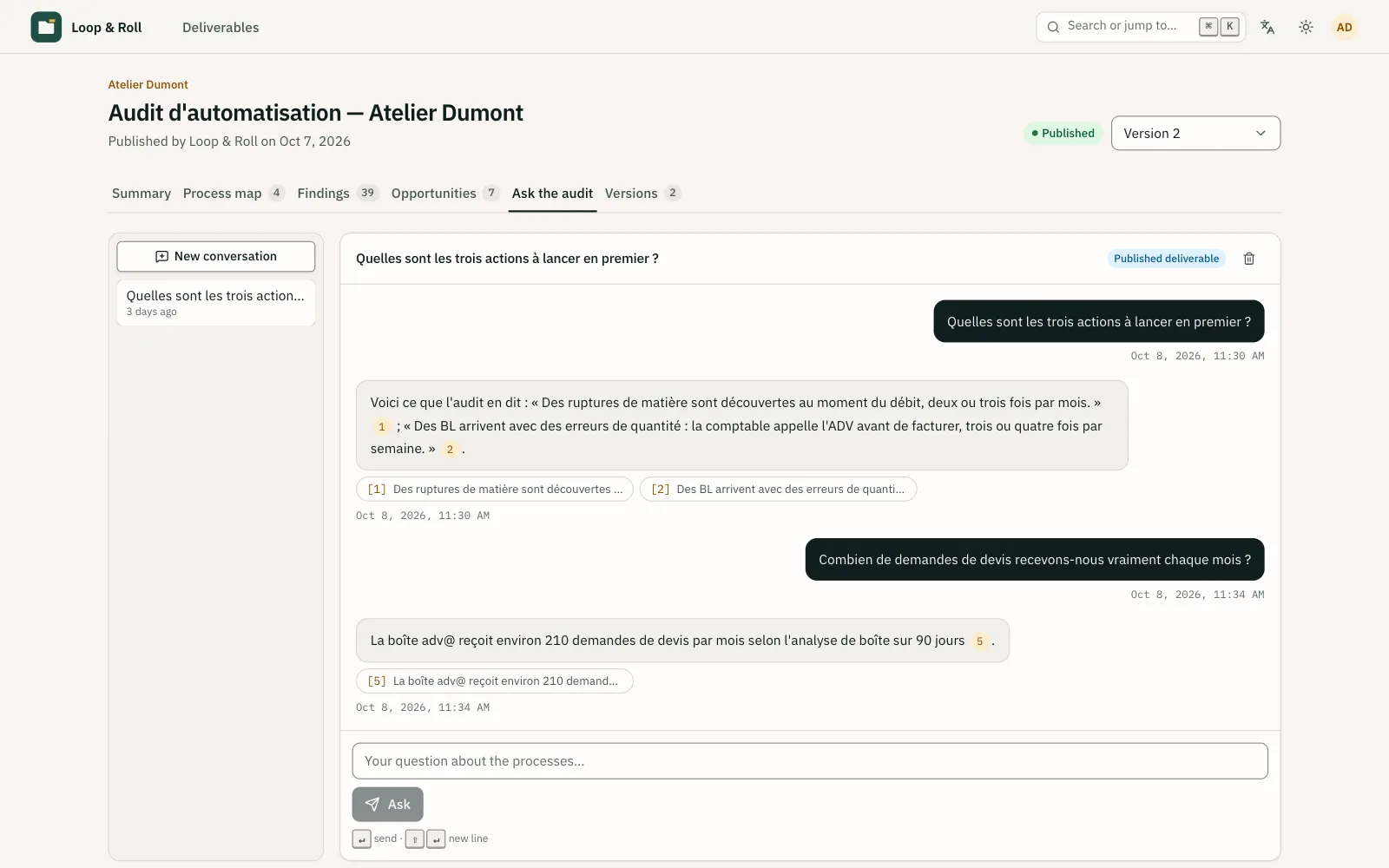
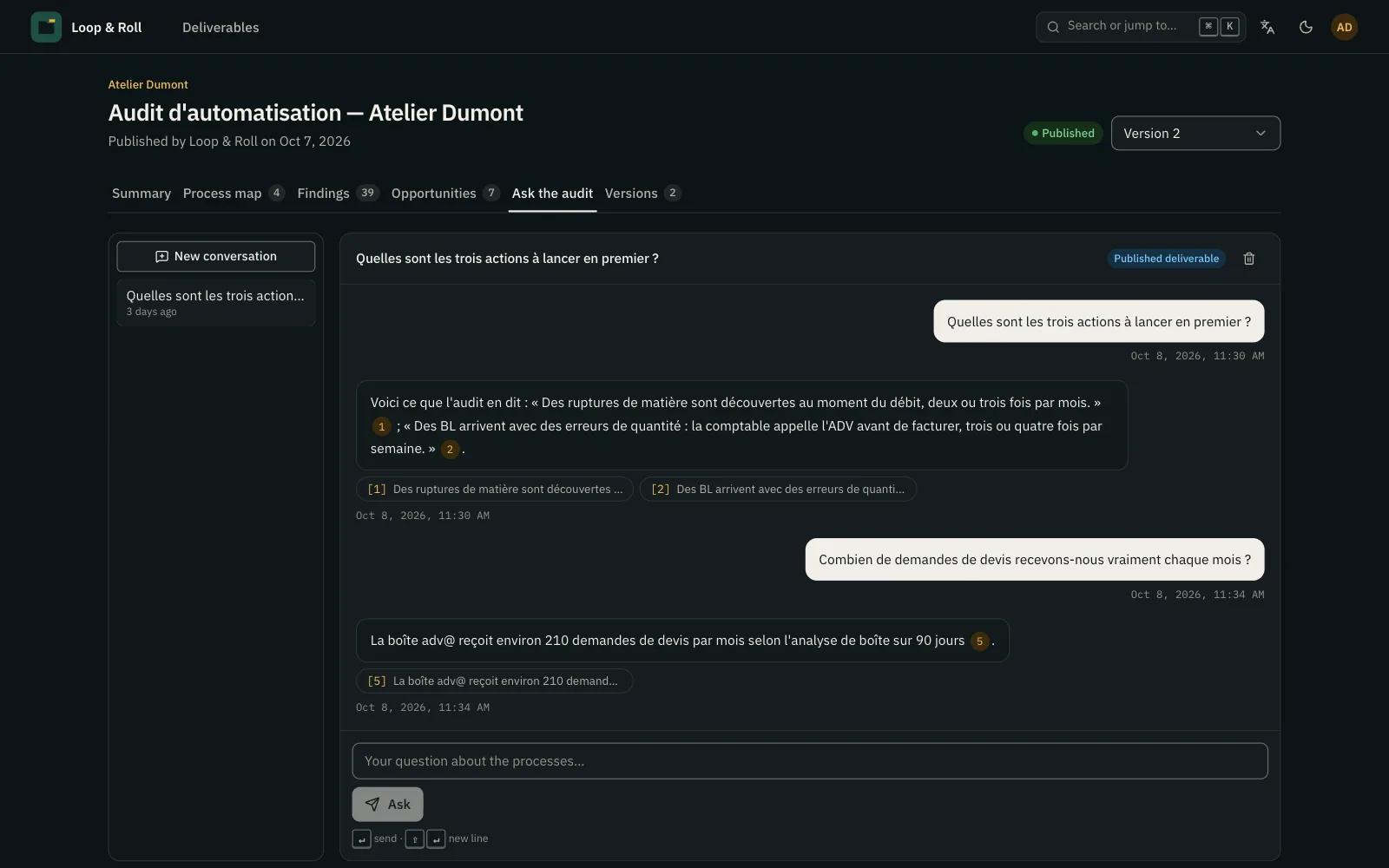
A chat that sticks to the audit
The sponsor can ask “how many people re-key orders?” or “what slows down invoicing?” The chat answers from the audit alone, cites its sources as links, and says “the audit does not answer this” when that is the case. It only sees what the person asking is allowed to see.
- No general knowledge passed off as a fact about the company.
- Questions about individuals, such as “who is the least efficient?”, are declined.
- For the sponsor, the chat is limited to the published deliverable, with no full transcripts.
In practice
- Sponsor access
- A guest account, via magic link or password, on the firm’s subdomain.
- Content
- Summary, process map, findings, opportunities, selected evidence, comments, and chat.
- Audio excerpts
- A few seconds around the quoted sentence, together with its transcript.
- Versions
- Publishing freezes a version (v1, v2, and so on); the previous one is marked as superseded.
- Documents
- Report, summary, and other documents generated from the audit, editable, exported to PDF, PowerPoint, or Word in your colors.
- Exports
- Processes in BPMN 2.0, findings and opportunities in CSV or JSON, and a printable version.
- Consultant edits
- A new analysis proposes changes to accept, without overwriting what the consultant has edited.
- Languages
- Deliverable in English and French.
Frequently asked questions
Is the deliverable a PDF?
First of all, it is an online space the sponsor opens with their own access, where evidence can be played back and the chat answers questions. The consultant can also generate documents from the audit, such as a report or a summary, review and edit them, then export them to PDF, PowerPoint, or Word in the firm’s colors. Processes export to BPMN, findings to CSV or JSON.
Can the sponsor listen to the interviews?
No. The sponsor only sees the evidence the consultant chose to publish: short excerpts and pins, attributed by role. Full recordings and complete transcripts stay with the consulting firm. Employees know this from the invitation onward, which helps them describe their work candidly.
Where do the chat’s answers come from?
The TellMeHow chat answers only from the audit: validated recaps, findings, artifacts, and external sources, within the access rights of the person asking. Every answer cites its sources. When the audit does not contain the answer, the chat says so and can suggest a follow-up to the consultant.
What happens if the audit changes after publication?
The consultant publishes a new version. Each version is frozen, and the sponsor sees what changed since the previous one. A follow-up with a few participants can therefore complete the deliverable without rerunning the engagement.
Can we bring the processes into our modeling tools?
Yes. Every process reconstructed by TellMeHow exports to BPMN 2.0, the standard exchange format for process modeling tools. Findings and opportunities export to CSV or JSON.
Related features
- Process map Processes rebuilt step by step, with actors, tools, volumes, and pain points, each one sourced.
- Your brand Your clients see your firm: subdomain, logo, colors, AI interviewer, and deliverable in your brand.
- Cross-analysis Every interview cross-checked into sourced findings, with contradictions and follow-ups to resolve them.
See a complete audit in thirty minutes.
A voice interview with screen sharing, the process map it produces, the deliverable the sponsor reads: on a demo engagement, with your questions.